Qucik Start
Using portable C++ library (C++ API)
To use the portable C++ library, called libSBNE, you first need to:
Either Build libSBML and libSBNE from source, or install SBNE (C++ API component) using its precompiled binaries.
Add SBNE include directory (
<SBNE install directory>/include) to the “include directory” of your project.Add libSBNE library (in
<SBNE install directory>/libfor Unix and in<SBNE install directory>/binfor Windows) to the “dependencies” of your project.Include the following headers in your script:
#include "sbne/sbml/ne_sbml.h"
#include "sbne/sbml/ne_layout.h"
#include "sbne/sbml/ne_render.h"
Now you are able to make use of the functions of the API in your code.
C++ example
Here is a simple script which makes use of the API to read the SBML document of an SBML (.xml) file, add Layout and Render features (if not included) to it, and finally write it to the SBML file.
#include "sbne/sbml/ne_sbml.h"
#include "sbne/sbml/ne_layout.h"
#include "sbne/sbml/ne_render.h"

using namespace sbne;

int main () {
    // set inputfile value to the absolute path of the input SBML (.xml) file.
    const std::string inputfile = "Absolute path to the input sbml (.xml) file";

    // set outputfile value to the absolute path of the output SBML (.xml) file.
    const std::string outputfile = "Absolute path to the output sbml (.xml) file";

    // read the inputfile and get its SBML document
    SBMLDocument* document = ne_doc_readSBML(inputfile);

    //get layout information (if exists) from the SBML document
    LayoutInfo* li = ne_doc_processLayoutInfo(document);

    // get render information (if exists) from the SBML document
    RenderInfo* ri = ne_doc_processRenderInfo(document);

    // if layout information does not exist
    if (!ne_net_isLayoutSpecified(ne_li_getNetwork(li))) {
        // apply autolayout algorithm
        ne_li_addLayoutFeaturesToNetowrk(li);
    }

    // if render information does not exist
    if (!ne_ven_isRenderSpecified(ne_ri_getVeneer(ri))) {
        // apply autorender algorithm
        ne_ri_addDefaultRenderFeaturesToVeneer(ri);
    }

    // add newly-added or already-included layout information to the SBML document
    document = ne_doc_populateSBMLdocWithLayoutInfo(document, li);

    // add newly-added or already-included render information to the SBML document
    document = ne_doc_populateSBMLdocWithRenderInfo(document, ri);

    // write the SBML document to the outputfile
    ne_doc_writeSBML(document, outputfile);
}
Using Python bindings
To use the language bindings of SBNE for Python, you first need to:
Either Build libSBML and SBNE (with enabled
WITH_PYTHONoption) from source, or install SBNE (Python Bindings component) using its precompiled binaries.In case you either enabled
PYTHON_INSTALL_IN_PREFIXoption while building SBNE from source or installed SBNE using its binaries,Add the directory of the built Python library (
<SBNE install directory>/lib/pyhton[version]/site-packages/libsbne) to yourPYTHONPATH.import _libsbnein your script.
In case you enabled
PYTHON_INSTALL_WITH_SETUPoption while building SBNE from source,import libsbnein your script.
Now, you can make use of the functions of the API in your Python script.
Python example
Here is a simple script which makes use of the Python bindings of the API to read the SBML document of an SBML (.xml) file, add Layout and Render features (if not included) to it, and finally write it to the SBML file.
import _libsbne as sbne

# set inputfile value to the absolute path of the input SBML (.xml) file.
inputfile = "Absolute path to the input sbml (.xml) file"

# set outputfile value to the absolute path of the output SBML (.xml) file.
outputfile = "Absolute path to the output sbml (.xml) file"

# read the inputfile and get its SBML document
document = sbne.ne_doc_readSBML(inputfile)

# get layout information (if exists) from the SBML document
layoutinfo = sbne.ne_doc_processLayoutInfo(document)

# get render information (if exists) from the SBML document
renderinfo = sbne.ne_doc_processRenderInfo(document)

# if layout information does not exist
if not sbne.ne_net_isLayoutSpecified(sbne.ne_li_getNetwork(layoutinfo)):
    # apply autolayout algorithm
    sbne.ne_li_addLayoutFeaturesToNetowrk(layoutinfo)

# if render information does not exist
if not sbne.ne_ven_isRenderSpecified(sbne.ne_ri_getVeneer(renderinfo)):
    # apply autorender algorithm
    sbne.ne_ri_addDefaultRenderFeaturesToVeneer(renderinfo)

# add newly-added or already-included layout information to the SBML document
document = sbne.ne_doc_populateSBMLdocWithLayoutInfo(document, layoutinfo)

# add newly-added or already-included render information to the SBML document
document = sbne.ne_doc_populateSBMLdocWithRenderInfo(document, renderinfo)

# write the SBML document to the outputfile
sbne.ne_doc_writeSBML(document, outputfile)
Using SBNE-GUI (Graphical User Interface)
To use the graphical user interface of SBNE, you need to:
Either Build libSBML and libSBNE (with enabled
WITH_GUIoption) from source, or install SBNE (SBNE-GUI component) using its precompiled binaries.Go to
<SBNE install directory>/bin:On Microsoft Windows and macOS, double-click on SBNE-GUI executable.
On Linux, run
./SBNE-GUIcommand.
GUI example
Here is a simple example to show how to:
Read the SBML document of an SBML (.xml) file.
Add Layout and Render features (if not included) to it.
Render a biological network for the SBML model using its Layout and Render information.
Make a change to the network of the model.
Write the modified SBML document to an SBML file and save it.
To do so, once we run SBNE-GUI, we need to load an SBML file. Here, we click on “File” in the menu bar, and then click on the “Open” action.
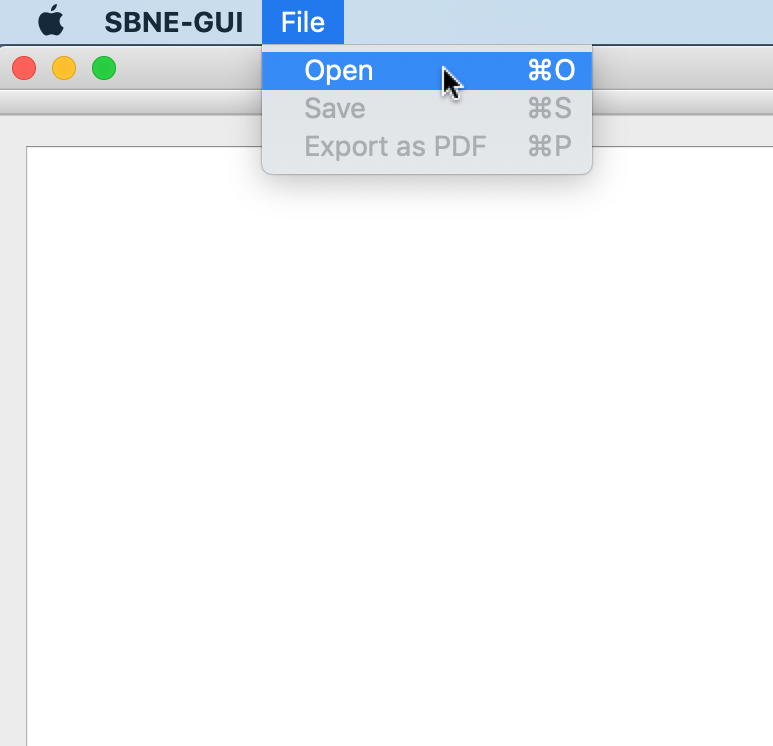
Loading an SBML file into the GUI.
Using the popped-up file dialog, we choose an SBML (Example.xml) file and open it. This action reads the SBML document in the file, (if not included) generates the Layout and Render information for the model, and renders the network of the model using this information.
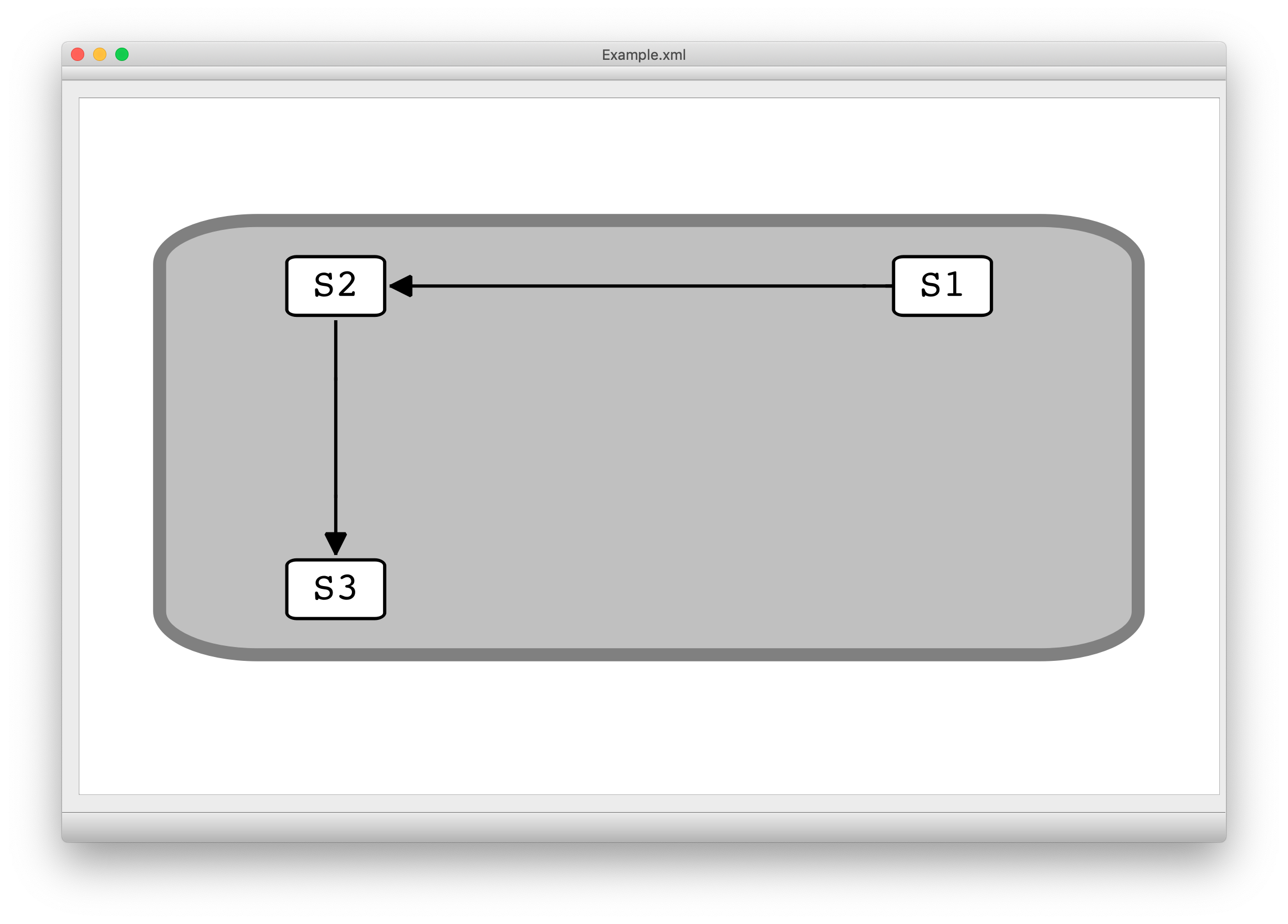
Rendered network of the SBML model.
Now, to become able to modify the features of the rendered network, we need to double-click on the graphical item whose features we want to change. Once it is done, a feature menu enabling us to make changes to that graphical item pops up at the left side of the GUI screen (here, we have double-clicked on the Species named S1, so an “Item Features” menu for “Species” has appeared). To close this menu, we can simply double-click on an empty zone within the graphics scene of the GUI.
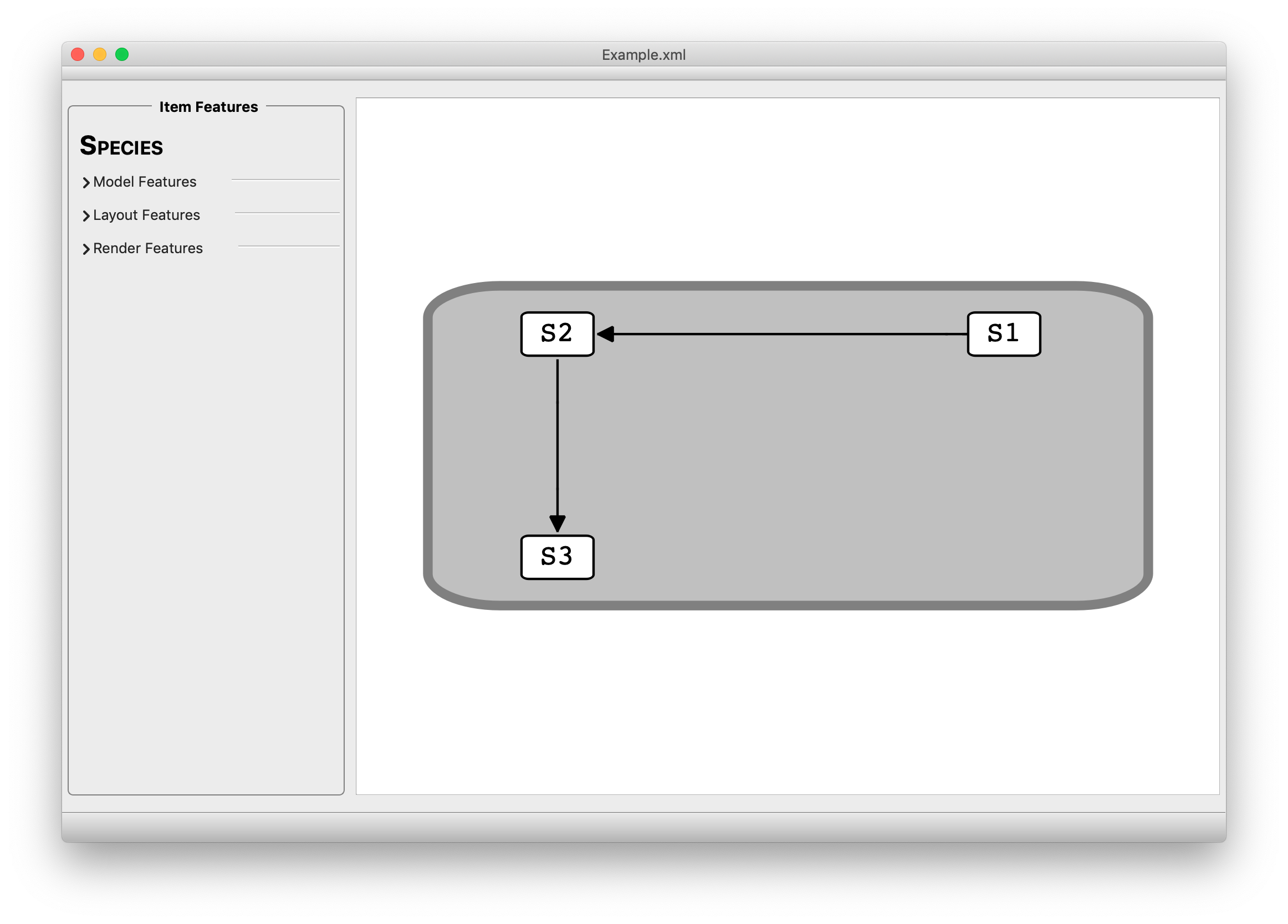
Getting access to the “Item Features” menu for “Species”.
As an example, here we want to change the fill color of the graphical item representing the S1 species. So, from the “Item Features” menu, we first expand the Render Features submenu, and then, under the Fill section, click on the Color button. A “Change Fill Color” dialog box, which enables us to choose a new color, pops up.
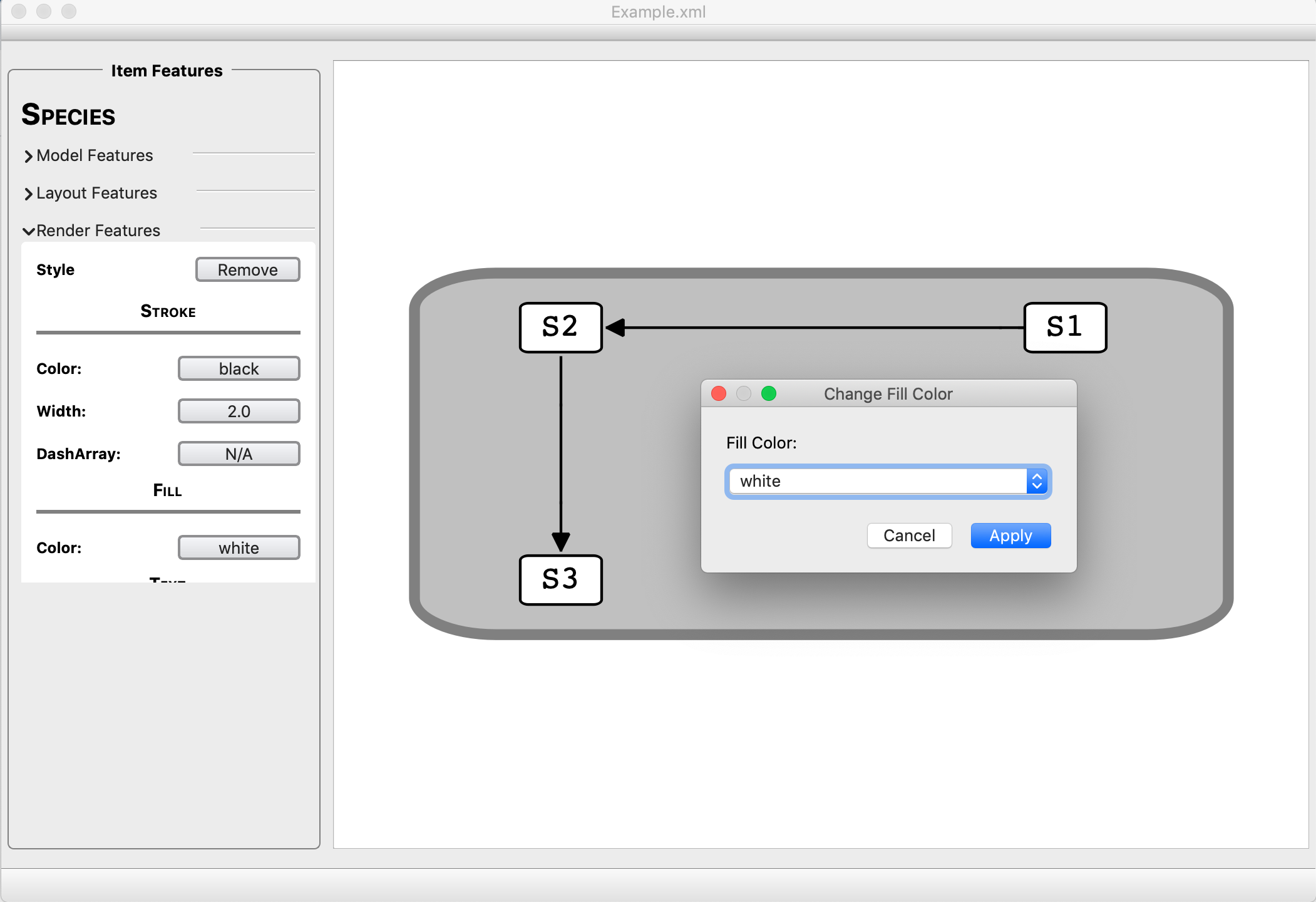
Getting access to the “Change Fill Color” dialog box.
Then, we click on the “Fill Color” drop-down list and choose a color (“red”) from the list of available colors.
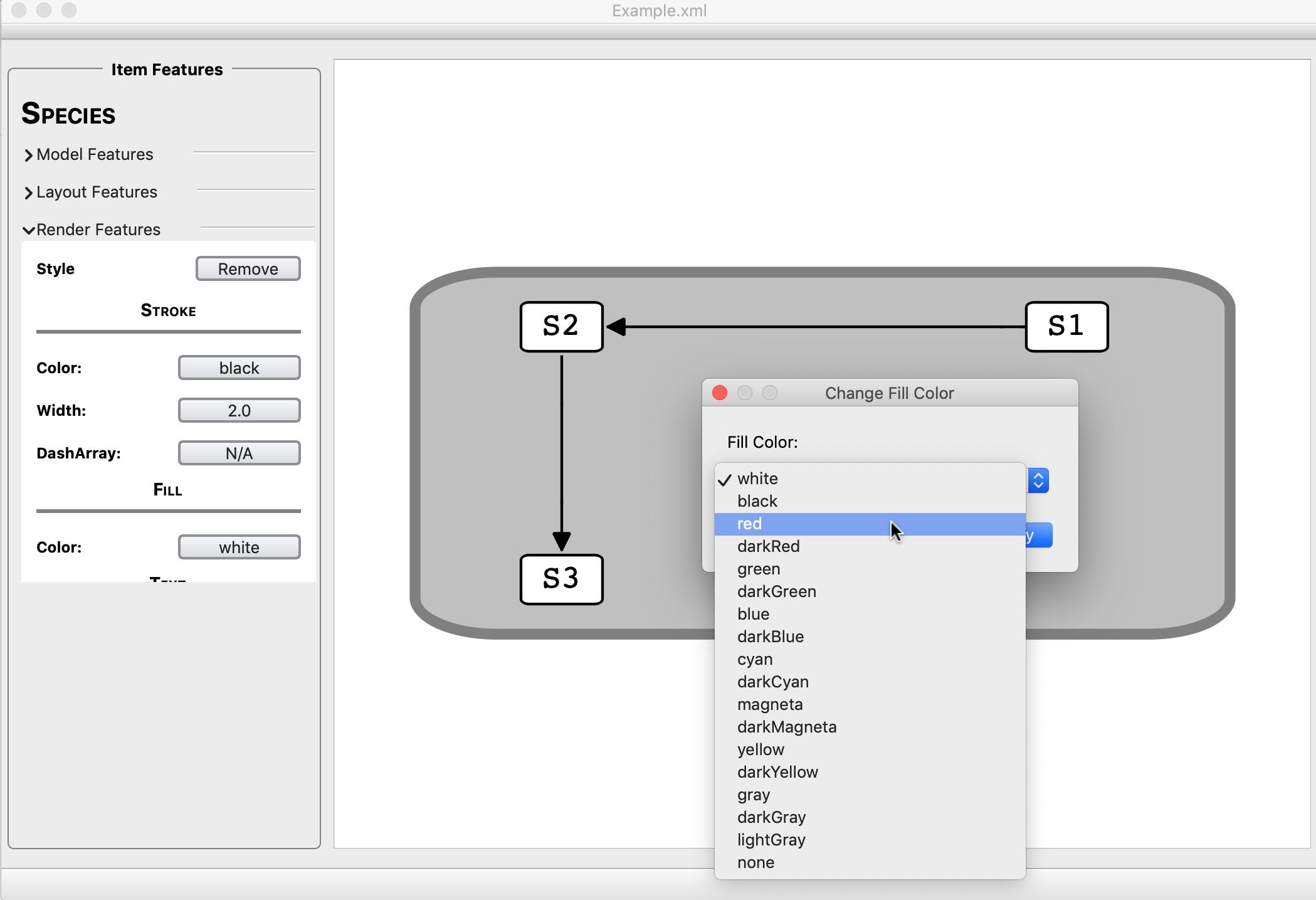
Choosing a new color using “Change Fill Color” dialog box.
After we choose our desired color, we click on the “Apply” button in the “Change Fill Color” dialog box, so the fill color of the graphical item representing the S1 species turns into the chosen color.
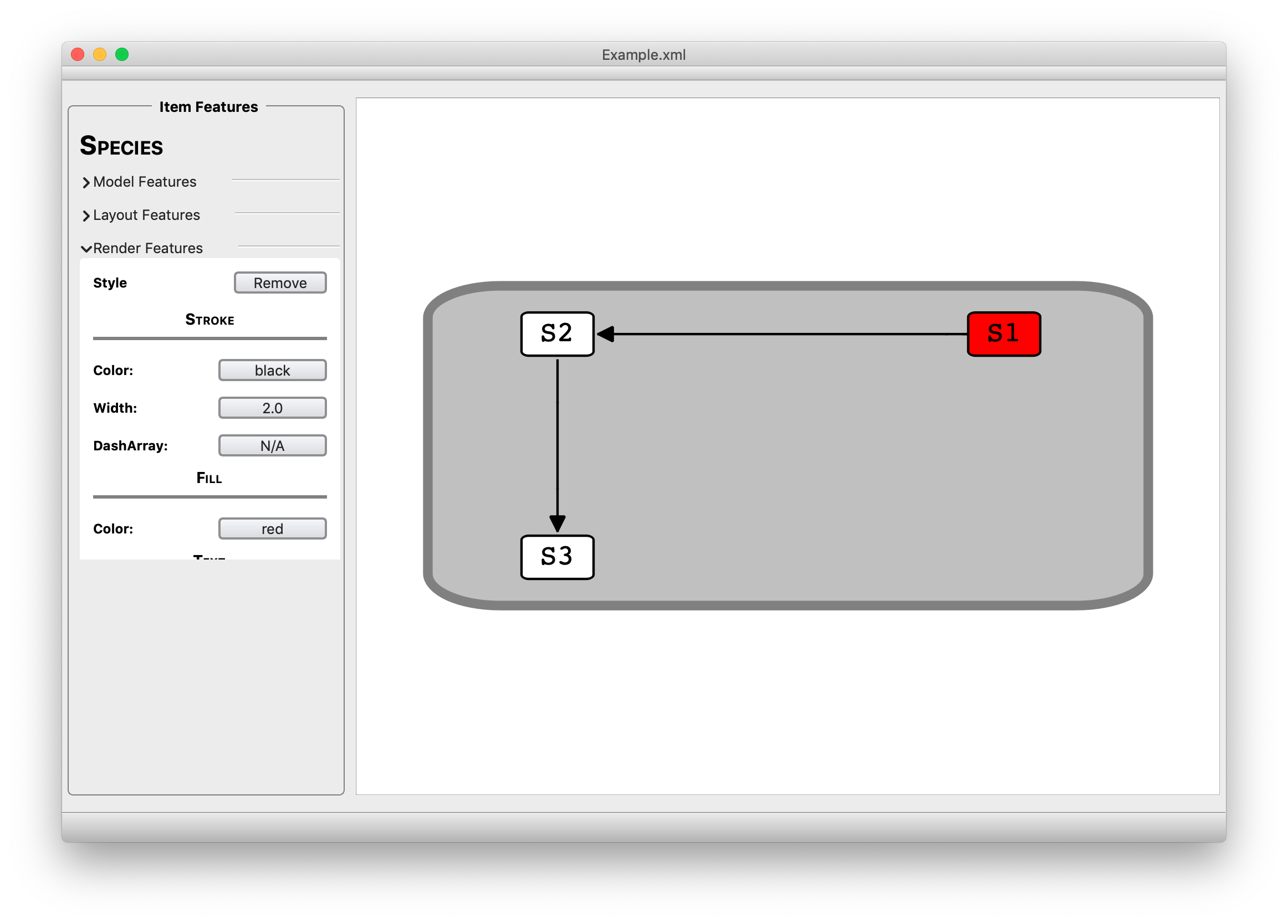
Modified network of the SBML model (the fill color of the graphical item representing the S1 species has turned into “red”).
To write the modified features to the existing SBML model file and save it, we click on “File” in the menu bar, and then click on the “Save” action. Using the popped-up file dialog, we can choose a name and directory for the SBML (.xml) file and save it. The GUI also allows us to export the drawing of the rendered network in PDF format by clicking on the “Export as PDF” action under the “File” menu bar.
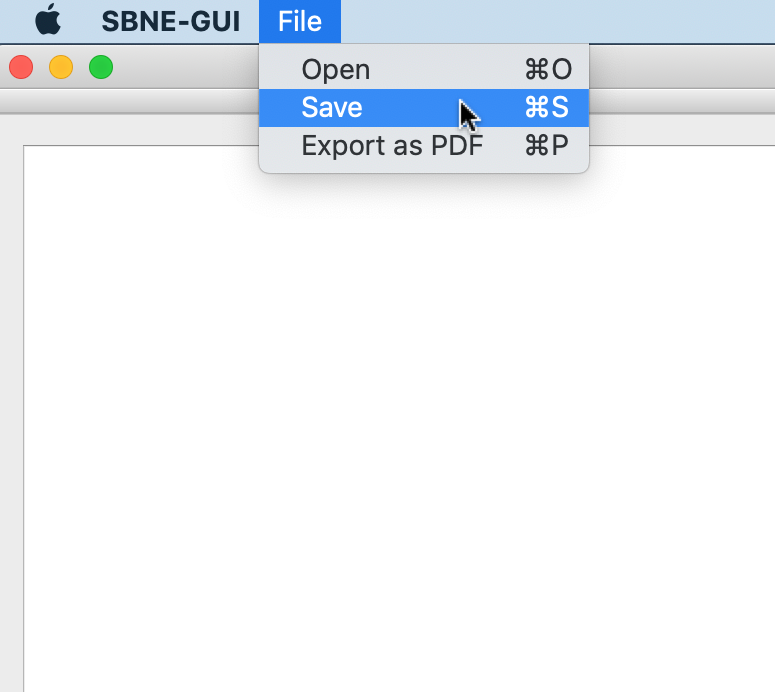
Saving the modified SBML model and exporting a drawing of its rendered network as a PDF file.